
Paediatric Standers Vs Gait Trainers. Whats the Difference?

When it comes to aiding children with mobility challenges, two essential pieces of equipment stand out: standing frames (pediatric standers) and gait trainers (support walkers). While both support an upright posture, each plays a unique and complementary role in supporting physical, psychosocial, and developmental needs.
What Are Standing Frames?
Standing frames are rigid support structures that help children stand in a safe, upright position. They may be static or mobile and come in various styles, including upright, prone, supine, or multi-position standers. Some models also tilt forward or backward for easier transfers or enhanced trunk control.
Key benefits include:
-
Facilitating hip joint development and alignment, especially in early childhood.
-
Increasing bone density, stretching muscles, and preventing contractures over time.
-
Improving physiological functions such as breathing, digestion, circulation, and skin integrity.
-
Boosting engagement and self-esteem by enabling children to interact at eye level with peers and their environment.
What Are Gait Trainers?
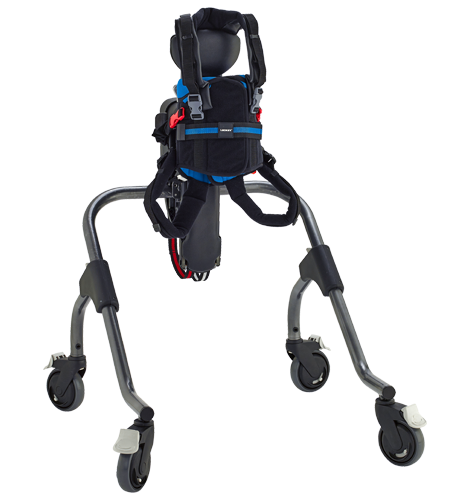
Gait trainers are wheeled devices that assist children who cannot walk independently by providing support for balance and weight-bearing. These devices bridge the gap between stationary support and active mobility, fostering movement and participation.
Primary advantages include:
-
Encouraging active movement, stepping practice, and exploration of the environment.
-
Enhancing motor functions, independence, and psychosocial well-being through improved mobility experience.
-
Supportive effect on emotional development—interviews and case studies report better engagement and psychological health.
Why Both Are Crucial — They’re Not Mutually Exclusive:
These tools are often used together, not as alternatives. Each serves different therapeutic and developmental goals.
From Sunrise Medical’s Education in Motion blog:
“Children with additional needs benefit from both standing and gait trainers – each serves a different, though equally important, role.”
NAPA Centre Australia reinforces this perspective:
-
A standing frame is essential if the child cannot yet bear weight through the legs or has muscle contractures—even if they can use a walker.
-
If the child can take some steps with support but still needs postural alignment or prolonged stretching, the standing frame remains crucial.
The overall message: it’s not about equipping children with more devices, but giving them more opportunities to grow, move, and thrive in their own way.
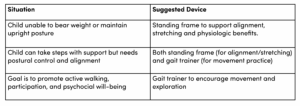
Clinical Guidance: When to Choose Which
Here’s a quick decision‑making guide:
Putting It All Together: A Holistic Approach
A well-rounded therapeutic strategy combines both devices:
-
Start with a standing frame to build postural stability, enhance physiological health, and support emotional and social engagement.
-
Incorporate a gait trainer when stepping and movement become possible to foster active participation, independence, and mobility.
-
Collaborate with a therapist, such as a pediatric physiotherapist, to assess needs, trial equipment, and monitor progress.
Final Thoughts
Standing frames and gait trainers each offer unique benefits—whether supporting alignment, stretching, weight-bearing, or movement and exploration. Used together, they empower children with mobility challenges to grow, participate, and connect fully with their world.

Leckey Squiggles + Stander
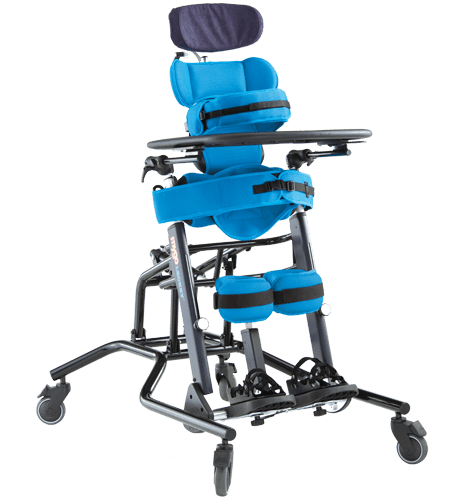
Leckey Mygo Stander
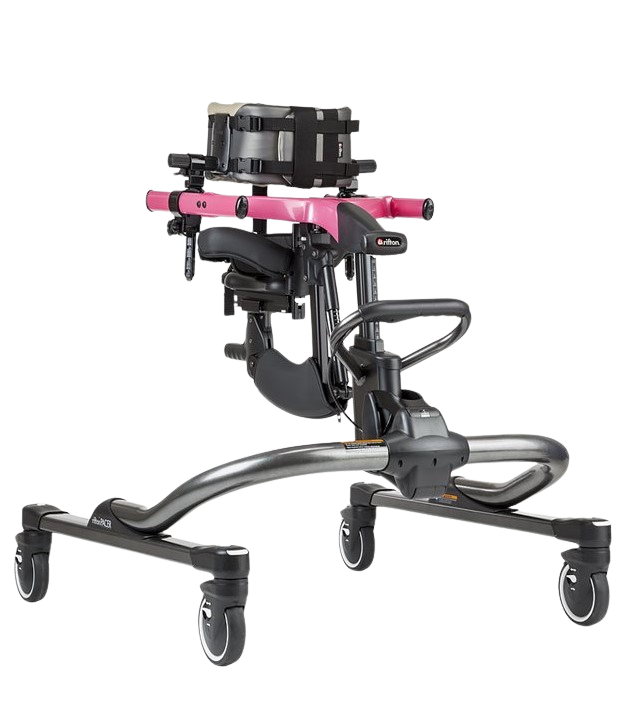
Rifton Pacer